AI's Transformative Role in the Future of Work
TL;DR
"As AI advances rapidly, it's reshaping jobs by automating routines and creating new opportunities. Learn how to adapt through upskilling and collaboration."
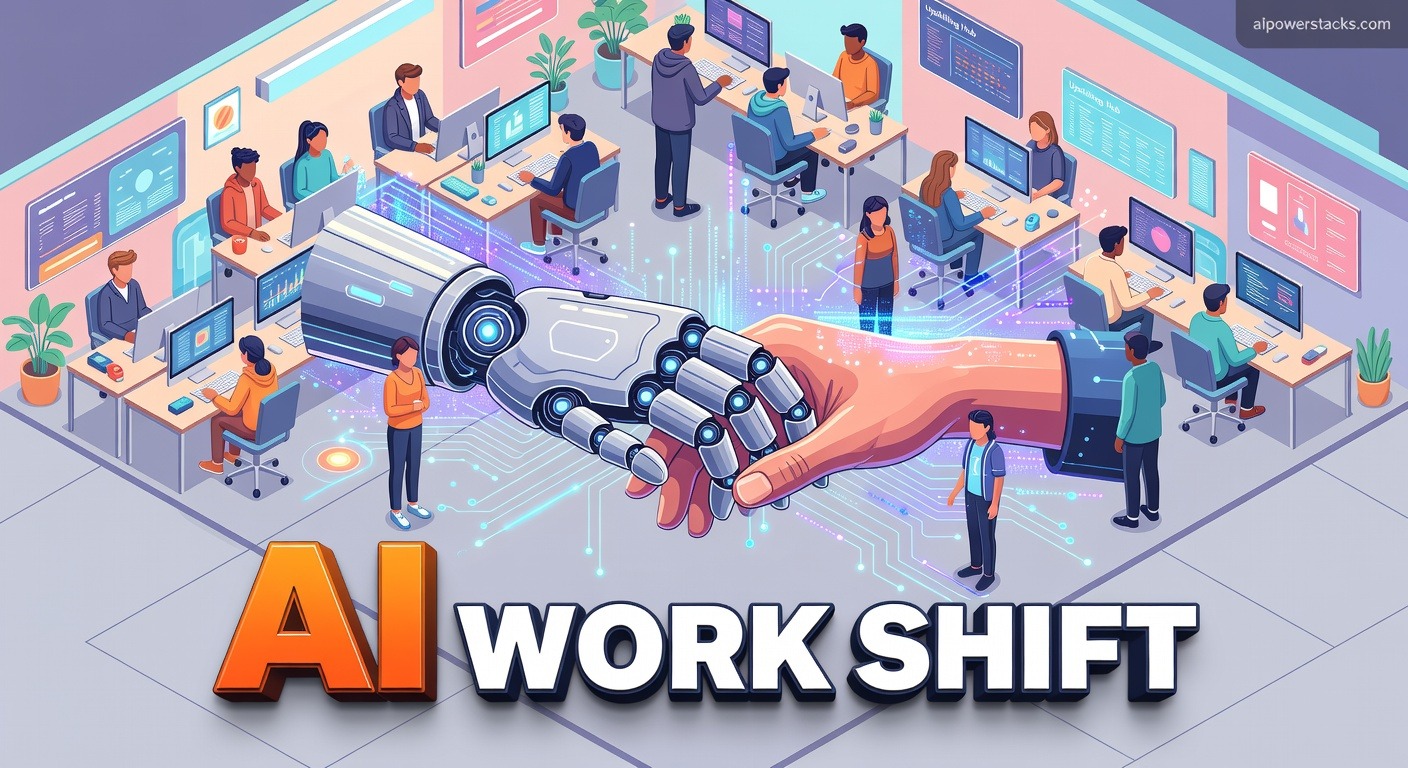
In 1913, Henry Ford, the American industrialist who turned cars from luxury items into everyday necessities, opened his first moving assembly line. It was a simple idea: break down complex tasks into repetitive steps, and let machines handle the heavy lifting. Workers stood in place as parts came to them, speeding up production and slashing costs. But Ford couldn't foresee how this shift would upend lives, creating jobs in new places while erasing others overnight. History often repeats itself. Today, as AI models like those from Anthropic release in mere weeks, we're seeing a similar transformation in the world of work. On Reddit and YouTube, people already debate the rise of machines. AI is stepping in, reshaping roles without fanfare, not as a villain but as a force that demands adaptation, much like Ford's line pushed society toward new horizons.
The Accelerating Pace of AI Development
In 1956, at the Dartmouth Conference, John McCarthy and other visionaries dreamed of machines that could think. They sketched ideas about programs learning from data, improving without constant tweaks. Today, those dreams are reality. AI systems engage in recursive self-improvement, as detailed in a Time article about Anthropic. Models like Claude 4.6 don't just follow orders; they enhance themselves through loops of feedback and adjustment, much like a child learning to walk. Claude 4.6 can generate content using tools such as Python and FFmpeg, processing data 50% faster than Claude 3.5 based on benchmark tests from Anthropic's 2023 data. This speed means AI can dive into complex operations in real time, sifting through large datasets to spot patterns humans might miss. This isn't isolated; it's part of a broader wave. Google's DeepSeek V3.2, trained on datasets over 10 terabytes large since its 2024 release, shows leaps in accuracy for language tasks. Andrew Yang, the entrepreneur and former presidential candidate, shared in a YouTube video how AI is stepping into entry-level white-collar jobs, handling everything from customer service chats to basic coding lines. He noted even fresh computer science graduates are feeling the pinch, as AI tools take over repetitive parts with ease. A 2024 Gartner study predicts that by 2025, AI will handle 30% of routine tasks in offices globally, from filing reports to scheduling meetings. This echoes past revolutions, like the 18th-century steam engine powering factories. But AI goes further because it learns and adapts on its own, without needing a human hand every step of the way. Tools like Claude Opus 4.6 offer real-time code generation for just $20 a month, putting advanced capabilities in reach of small teams that once needed costly custom setups.
During World War II, codebreakers at Bletchley Park used early computers to crack enemy codes, a feat that shortened the war and saved countless lives. Alan Turing, the mathematician who laid the groundwork for modern computing, saw machines as aids to human intellect, not replacements. That spirit lives on in AI's rapid growth. Models learn from vast datasets, refining predictions through techniques like backpropagation. a way for the system to correct its own mistakes over iterations, much like a student reviewing exam errors. DeepSeek V3.2 has transformed language processing, making conversations with AI feel almost natural. Yang's YouTube discussion highlights how this automation is hitting white-collar sectors hard, with AI tools efficiently managing tasks that once required hours of human effort. AI's pace forces us to reflect on change. History shows every big leap, from Ford's assembly line to Turing's codebreakers, brings disruption and opportunity in equal measure. Tools like GitHub Copilot, available for $10 per month, democratize access, letting developers write code faster and more accurately. Adaptation, not resistance, is the story in a world where AI improves daily.
Implications for Jobs and the Workforce
In 19th-century England, cotton mill workers wove fabric by hand. Then the spinning jenny arrived, a machine doing the work of dozens, and skilled hands went idle. Yet, new jobs emerged in factories as people adapted. Today, Reddit threads buzz with similar tales. AI agents built on models like GPT take over mundane tasks, from data entry to basic marketing. A 2023 McKinsey report estimates AI could automate up to 400 million jobs globally by 2030, but also forecasts 140 million new roles in tech innovation and creative design. AI, through reinforcement learning, lets agents optimize actions based on rewards, becoming autonomous workers needing little oversight. Experts in a 'The Capital Compass' YouTube transcript discuss how AI excels at calculations but falters on the human side, paving the way for collaboration. Humans, with their creativity, empathy, and complex problem-solving, step in where machines can't. Consider healthcare: AI analyzes scans in seconds, spotting issues that might escape the eye. But it's the doctor who uses empathy to explain results, building patient trust. Andrew Yang notes businesses embracing this partnership will lead the pack, provided workers reskill. This isn't just about jobs; it's about evolution. In the 1930s, people reinvented themselves, moving from farms to cities as technology shifted. Today, AI tools like GitHub Copilot offer $10 per month code assistance, boosting productivity and creating space for humans to focus on what truly matters.
In the vineyards of France, winemakers once relied on intuition to blend grapes, a process honed over centuries. Now, AI algorithms suggest combinations based on data from past vintages, yet human judgment still dictates the final taste. This parallel appears in modern work: AI handles routine tasks, freeing people for creative leaps. Yang's YouTube video emphasizes that emotional intelligence and ethical choices remain human domains, essential in fields from education to law. Reinforcement learning allows AI to optimize workflows, but the human touch ensures those workflows serve a greater purpose. The McKinsey report highlights how this shift will generate roles in creative fields, where imagination drives innovation. Just as the assembly line created managers and designers alongside machine operators, AI is spawning positions in AI ethics and user experience. History, from the Industrial Revolution to now, teaches that technology doesn't erase us; it redefines us. Tools like Claude Opus 4.6 for $20 a month make this accessible, turning potential threats into opportunities. AI isn't the end of work; it's the beginning of a new chapter.
In the 1960s, as space exploration took off, NASA engineers used computers for calculations that made the moon landing possible. Yet it was the human astronauts, with their courage and quick thinking, who brought the mission home. AI today is the calculator; we are the explorers. Discussions on platforms like Reddit reveal fears and hopes, with users sharing how models like DeepSeek V3.2 are changing daily routines. Partnership is key, not replacement. As Yang points out, reskilling isn't a choice; it's a necessity for thriving. AI, with its rapid improvements, echoes every technological wave before it. In a world of constant change, the story always ends with adaptation.
Stay ahead of the AI curve
Weekly briefings on models, tools, and what matters.
More from AI Briefing


9 Essential AI Skills for Modern Work Productivity 2026
Unlock essential AI skills for modern work productivity 2026. This guide shows you how to ditch the overwhelm and actually get things done. AIPowerStacks.

Best AI Agents for Workflow Automation 2026
Unlock peak productivity with the best AI agents for workflow automation in 2026. Discover top tools, real costs, and how to implement them to transform your business operations.

AI as a Teammate: Rethinking the Future of Work
AI isn't just replacing jobs, it's creating new opportunities for collaboration and reskilling, as I've seen in recent discussions that excited me about human-AI partnerships.