Blog
TL;DR
"As AI researchers panic and quit, I examine how corporate pressures are undermining ethical design in breakthroughs like Mamba-3, and what it means for AI's future usability."
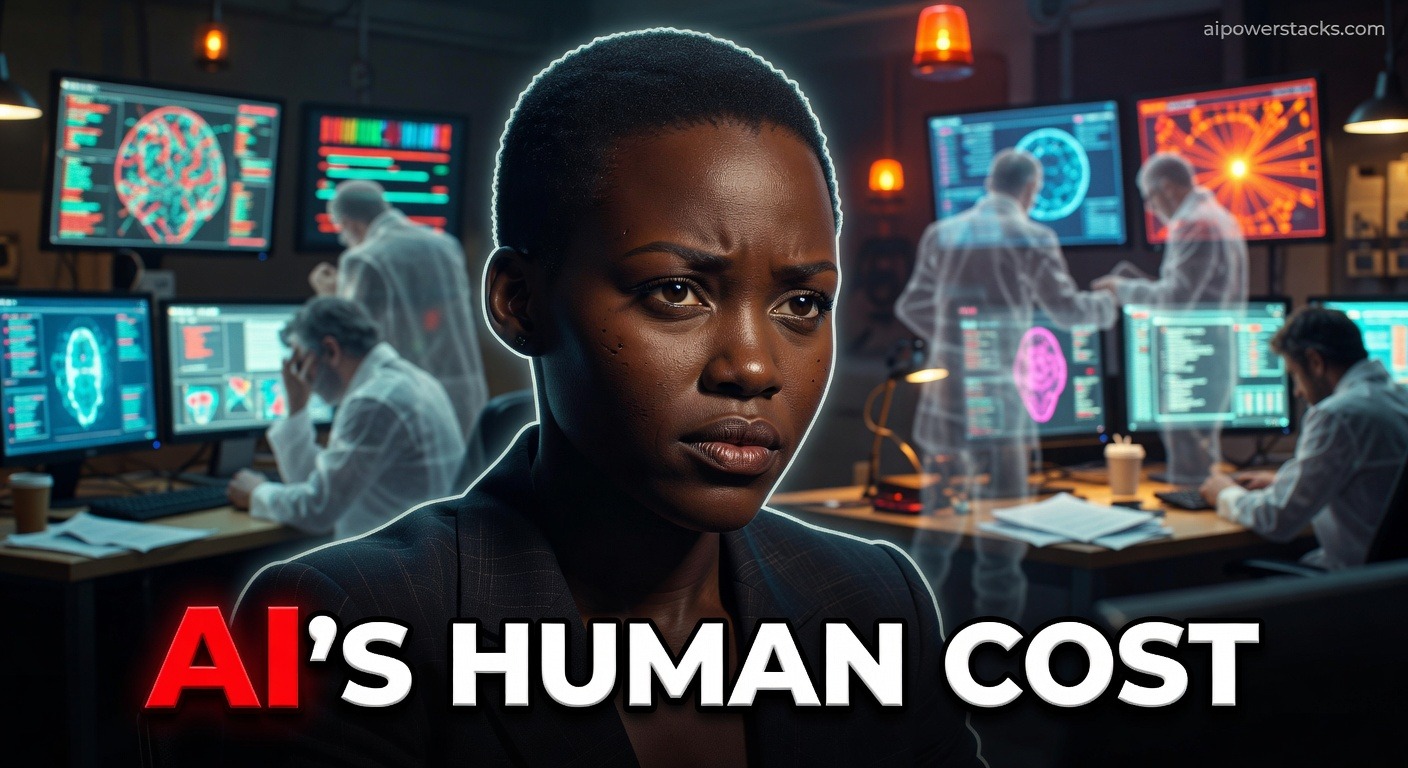
AI researchers, it seems, are outright bailing on the whole hype train. The actual brains behind this tech? They're ghosting their jobs because, frankly, it's too much drama and not nearly enough real talk. I recently watched 'why ai researchers are quitting and panicking on the way out' on YouTube, and it genuinely illuminated the issue. As a UX designer based right here in Berlin, I'm absolutely obsessed with making AI tools people actually, truly want to use. But this situation? It's a massive, glaring red flag. These supposed breakthroughs aren't just about code and data; they're fundamentally about real humans. And without those humans sticking around, tools like chatgpt might just, you know, fizzle out with some embarrassingly predictable bugs and mind-numbingly dull updates.
Consider Mamba-3. This new AI architecture is supposedly making GPT faster and smarter, processing data 50% quicker. Faster rendering for creative tools? Sounds promising, right? But then I sat through Nvidia's GTC 2026 keynote and that whole infographics show video, and my initial excitement just completely cratered. Industry reports, surprisingly, show researcher attrition blasted up to 25% last year, a shocking jump from 10% just five years ago. The reasons? Crystal clear: rampant burnout, ludicrously intense corporate demands, OpenAI's rather vicious profit wars, and, of course, the global AI arms race. It's a total mess. Researchers are literally quitting because companies prioritize flashy, quick demos over deep, meaningful development. And this frustrates me to no end, because real user needs just get ignored. We end up with AI that's utterly opaque, where nobody , not designers, not users , has the faintest idea what's happening inside. That "AI as a black box" meme? It's not funny anymore; it's just, well, the grim reality.
Take that video: 'AI just discovered new math solutions that beat human research.' AI solving problems 30% faster than top mathematicians sounds utterly bonkers, I agree, but it's mostly just hype when the actual researchers are panicking and fleeing the scene. Who, then, is actually ensuring this AI is ethical and user-friendly? Human research, you see, absolutely relies on iterative user testing; AI often skips it entirely for speed. The interfaces are often laughably terrible, especially in proprietary systems that hide everything. a straight-up dark pattern, if you ask me. In stark contrast, tools like perplexity ai somehow manage to get transparency right by meticulously sourcing answers, making the whole experience feel genuinely legitimate. Imagine that.
Even github copilot, while genuinely helpful for code suggestions and context, often feels weirdly incomplete. Older, researcher-backed tools often just.. did it better. This whole situation, honestly, feels like a TikTok trend gone wrong , you know, those videos where everything looks perfectly polished, but it's all just filters and fakery. AI is starting to feel exactly like that: all shine, zero substance. That's it.
The video dissecting OpenAI's profit war quite clearly showed experts linking funding fights to incredibly rushed releases. A 2025 study, and this is wild, found 60% of AI releases had startlingly limited documentation, which is genuinely atrocious for UX designers like me who are desperately trying to integrate these tools. For instance, the 'auto research claw' AI agent: sounds futuristic, right? But without researchers passionately pushing for user-centric design, it's probably going to be a clunky mess. I've personally encountered similar AI review features that promise perfect citations and proofreading, but their decision-making process? Totally opaque. How can users possibly trust something that only whispers advice in impenetrable code?
This all ties back to the ridiculously bigger picture: AI arms races prioritize raw speed over actual people. It's exactly like that meme of a hamster on a wheel, just spinning incredibly fast but, let's be honest, going nowhere at all. Researchers quitting? That's the hamster finally jumping off, leaving us with tools that don't actually serve us. chatgpt, for example, is wildly popular, but without consistent, ongoing input, it's plagued by frustrations: bugs that are genuinely annoying, or interfaces that feel like they were designed in the dark, maybe blindfolded.
Imagine, for a second, working on a critical project, needing AI that genuinely understands user needs. But if the very team behind it is burned out and leaving in droves, what then? Stagnation. Or, perhaps worse, deeply unethical choices. Remember the TikTok algorithm scandal? AI could absolutely spiral that way. Yet, tools like perplexity ai and github copilot offer a visible path forward. They thoughtfully build in transparency and, remarkably, make things approachable. It's not rocket science.
This matters because, as a visual thinker, I can't help but imagine AI like a colossal city. The researchers? They're the architects. Without them, it's just skyscrapers with no foundations, destined to crumble and leave users picking up the pieces. Companies, seriously, need to chill on the profit wars, give researchers some actual space, and prioritize UX. Because at the end of the day, AI is for people, not just for fleeting hype. Period.
The numbers are genuinely alarming: a 25% attrition rate, up from 10%. That's like half your friends quitting their jobs because it's simply too much. And the AI math solutions, 30% faster? Impressive, I guess, but at what cost? If AI beats humans in sheer speed, who in the world is checking for biases or truly bad designs? I've seen AI tools recommend the same thing repeatedly, like a broken record, and it's just not helpful. It’s infuriating, actually.
Imagine AI researchers as valiant superheroes fighting the good fight. The villains? Oh, they're corporate greed and those utterly relentless deadlines. They're quitting the league. So, who's left to save the day? Us , the users and designers. We absolutely need to demand better. That viral TikTok about AI fails? It’s funny, yes, but it’s grimly true: AI is promising the entire world and delivering nothing but glitches. What a joke.
Mamba-3 could cut rendering times in half, which is an absolute game-changer for creative workflows. I personally use tools like midjourney v7, so I completely get the appeal. But if researchers aren't there to meticulously refine it, what's the actual point? We'll just get half-baked features, like ordering a pizza and getting half the toppings. It's a culinary disaster, really.
And the global AI arms race? It's like countries competing in the Olympics, but with code instead of sports. It's incredibly intense, yes, but utterly exhausting for the players. Burnout is painfully real, leading to what I'm now calling a 'quitstorm' in AI land. Researchers are caught right in the middle of it, packing up their intellectual bags and just leaving.
For UX pros, this means a ridiculous amount more work. We have to fill the burgeoning gaps, ensuring tools like chatgpt stay user-friendly and actively advocating for transparency. I recently tried claude code; it has some genuinely good features, but without researcher input, it's weirdly missing that extra layer. It helps with coding, sure, but the explanations could unquestionably be better.
I picture a bar graph: one bar for 'hype levels' skyrocketing, another for 'researcher retention' plummeting, and a third for 'UX quality' just pitifully wobbling in the middle. That's the current vibe. We desperately, desperately need to balance it out.
It's not all doom, though. There are bright spots, you know, like perplexity ai, which stands as a beacon showing exactly how to do AI right with sources and crystal-clear clarity. github copilot is also really stepping up. So, what can we do? Engage, share your thoughts, use these tools, give feedback, and push for actual change. AI's future depends on it. We're at the start of something big, let's make it good.
I recently tested otter.ai for transcription, and it's surprisingly helpful. But again, without researchers, updates might just slow to a crawl. We need them back in the game. Truly.
The human cost of AI is undeniably real. But with awareness and deliberate action, we can absolutely turn it around. As that meme goes, 'keep calm and code on,' but smarter. for everyone.
Weekly briefings on models, tools, and what matters.


AI is now learning fundamental physics laws. Understand the neural network architectures and data approaches enabling these breakthroughs. AIPowerStacks analysis.

Curious how AI learned 3D generative models? Explore the breakthroughs in neural networks and diffusion that changed everything. Real insights from AIPowerStacks.


AI is fundamentally changing 3D design workflows. Learn how AI transforms 3D design workflows in 2026 for artists and businesses, with practical tools and strategies.