Blog
@sukiwatanabe
TL;DR
"Curious how AI learned 3D generative models? Explore the breakthroughs in neural networks and diffusion that changed everything. Real insights from AIPowerStacks."
vibe check: are we all still reeling from the absolutely breakneck speed of AI progress, or have we just accepted that every week feels like a year in tech time?
Honestly, I'm still picking my jaw off the floor.
Especially when it comes to 3D. Remember when creating anything in 3D meant weeks in Blender, wrestling with meshes and textures? A whole thing.
Now, AI is not just assisting, it’s literally conjuring 3D from scratch. And that’s where it gets wild, isn't it?
So, you've seen the mind-bending videos, the impossible objects, the generative art that looks like it stepped out of a dream. But how did we even get here, really? How did AI go from making pretty pictures to understanding spatial relationships, lighting, and object permanence in a literal, utterly three-dimensional space?
It wasn't just some magic wand wave, like the one from Cinderella; it was a series of absurdly clever AI research breakthroughs.
The real tea? It started with foundational work that lets AI grasp vision, then it learned to apply that understanding to generation. Think about it: for AI to "see" in 3D, it first needed to understand 2D really, really well. This is where convolutional neural networks (CNNs) came in, like, ages ago. way back when everyone was just getting excited about deep learning's potential, before it was cool, you know?
They were the original gangster image recognizers, uncannily good at spotting cats in pictures, or, you know, detecting cancerous cells in medical scans, which is a surprisingly parallel application.
But 3D is a whole other beast, isn't it? It's not just pixels on a grid. It’s points, planes, volumes. It’s geometry. It’s physics, kinda. Early attempts at AI 3D generation struggled because traditional 3D representations like polygons or voxel grids are just messy for neural networks. honestly, they were like trying to draw with a brick for the AI. They don't scale well. High-resolution 3D data meant mind-boggling computation, and frankly, the models just didn't *grok* the underlying geometry at all, not in any meaningful way.
So, the big shift came from approaches that could represent 3D information in ways AI could actually process. Enter things like Neural Radiance Fields (NeRFs) and Gaussian Splatting. Sounds nerdy, because it is. But these are the literal building blocks for how AI learned 3D generative models to render scenes with uncanny realism, allowing the AI, instead of defining every polygon or trying to wrestle with messy voxel grids, to simply learn a continuous function that describes the color and density of light at every single point in space, like a digital map of all the photons, which is frankly, an absolutely mind-boggling approach to computational graphics.
It's like it learns the actual light field, not just the surface. It's genuinely brain-melting, no exaggeration.
It's not just about creating, it's about understanding the underlying structure of reality.
You know Midjourney and DALL E 3? The stuff that took over AI art? They're built on diffusion models. These models learn to denoise random static back into coherent images. it's like teaching AI to clean up a super messy room until it looks perfect, like Marie Kondo got a hold of a neural network. This core idea, this "denoising" or "reverse diffusion" process, turned out to be ludicrously powerful for generating new things, not just fixing old ones; it was a total game-changer.
And then someone had the bonkers idea: what if we apply this to 3D data? Instead of pixels, think voxels, point clouds, or those fancy implicit representations. Instead of just a flat image, we're denoising a spatial scene. This is how AI started to generate full 3D models from text prompts, or even single 2D images. It's like it gained spatial reasoning, a fundamental understanding of depth and form that was previously just, well, missing.
It's utterly bonkers.
The process involves iteratively refining a noisy 3D representation, say, a chaotic cloud of points, until a clear, structured object or scene emerges. This iterative refinement is key to how AI learned 3D generative models to produce such detailed and consistent outputs, something truly remarkable to witness.
Tools like Sora, Luma Dream Machine, and Runway are unveiling before our eyes what happens when these research breakthroughs hit the mainstream. They're not just making 2D video; they're inferring and generating a consistent 3D world within that video. How wild is that?
That takes some serious underlying research to pull off. It’s not just faking it anymore. These models are learning not just individual frames, but the temporal and spatial continuity that makes a video feel real, which is a gargantuan leap in understanding 3D dynamics, if you stop to think about it. It really is.
Which is exactly why those foundational papers. you know, the "twelve pages that built modern AI" everyone talks about. they laid the groundwork for neural networks to even "think" at all. They taught us how these layers of interconnected nodes, like tiny digital brains, could learn patterns from data. It's the major stuff that led to everything, even the deep learning hype we see now, before it became, like, totally ubiquitous.
From the early perceptron models that could only classify simple patterns, say, distinguishing between an apple and an orange, to multi-layered networks with complex activation functions, each step was an incremental, yet mighty, push towards the sophisticated, genuinely complex models we have today.
The path from those early perceptrons to an AI that can generate a Modelfy 3D asset from a text prompt is an undeniable, frankly bizarre lineage. It's iterative, each breakthrough builds on the last.
Someone figures out a better way to train networks (like backpropagation), then someone else figures out how to make them deeper (deep learning), then someone else adds attention mechanisms (transformers!), and then suddenly, we have AI that understands context and can generate complex structures, including 3D scenes. it's like a scientific relay race where everyone keeps setting new world records.
And the role of massive datasets cannot be possibly overstated either. It's like, a genuinely absurd amount of data. AI models don't just spontaneously learn 3D; they learn it by seeing billions of examples of 3D data, images, and videos. These datasets, combined with advanced architectures like transformers that can handle long-range dependencies and complex relationships, are absolutely vital for how AI learned 3D generative models to infer spatial reasoning from essentially flat inputs, which is, when you think about it, kind of a miracle.
It's a whole research pipeline, and honestly, it's moving so fast it's hard to even keep up, if we're being honest. Like, truly impossible.
But the core idea is consistent: giving machines better ways to learn representations of the world, and then better ways to generate from those representations.
And the world is, you know, 3D. Which makes perfect, obvious sense.
And this continuous learning loop, fueled by massive compute and clever algorithms, is exactly why we are seeing such a mind-bending, almost unbelievable growth in AI's 3D capabilities.
Okay, so the tech is cool. But what does it actually mean for us, the people who, like, make things? Honestly, it means a tectonic shift, a complete upheaval. The barrier to entry for 3D creation is literally getting lower by the minute, which is like watching a mountain melt into a puddle. You don't need to be a master of Maya anymore to get a decent base model or even an entire scene. Is that not wild?
This is a radical democratizer for creativity, plain and simple.
This isn't about AI replacing human creativity. It's about AI becoming an unbelievably powerful co-pilot, like having a digital sidekick who never sleeps. Think about concept artists: instead of sketching out 10 variations with a Wacom tablet, you can prompt Krea AI or other tools to generate dozens of ideas in minutes. Then you refine them. It's about speed, iteration, and basically unleashing creative superpowers you didn't know you had. Adobe Firefly is already doing this for 2D, but imagine the full 3D suite, for crying out loud. What a thought!
For UX designers working on virtual reality or augmented reality experiences, this is huge, like, monumentally huge. Prototyping 3D environments, testing object placements, creating custom assets on the fly? It's going to be an absolute approach shift. The mental load of building from scratch is. and this is wild. it’s just vanishing, poof, into thin air. Figma AI is even hinting at similar capabilities within 2D design, so imagine that for 3D, like building a whole virtual city in an afternoon.
The ability to rapidly iterate on 3D assets and environments means designers can focus more on the user experience and less on the tedious technical execution of 3D modeling. It's a proper liberation, honestly.
Game developers can catapult asset creation pipelines by generating entire environments or prop libraries with AI. Architects can visualize concepts in 3D faster than ever. Even industrial designers can rapidly prototype product designs, like, for cars or furniture, in hours not weeks.
The implications are pretty much everywhere you need a 3D representation. It's kind of ridiculous, actually.
And meanwhile, while all this research is happening, the money machine is absolutely *printing*. Like, non-stop. OpenAI filing for an IPO? That's not just tech news, that's a seismic vibe shift, a real tectonic plate movement in the industry. It signals that this "AI thing" is not just some academic pursuit anymore, it's a multi-billion dollar industry with real-world stakes and, honestly, some serious geopolitical drama (looking at you, US accusations against Chinese tech companies), the stakes are genuinely sky-high.
The market sees the potential, even after the occasional "AI selloff" that sends everyone into a panic for a hot minute. The recovery after an AI selloff typically shows the underlying investor confidence in the long-term trajectory of this technology, which is pretty compelling.
This also means the pressure to innovate, to push the research boundaries even further, is relentless. It's a race, like the wild west of silicon. Who can build the better 3D generative model? Who can make it faster, more accurate, more controllable? The investment pouring into these areas is unapologetically fueling the breakthroughs we're seeing. And honestly, it makes me think about how many of these incredible, latest tools we track on AIPowerStacks will soon become household names, like Google or Netflix. It's just a matter of time, really.
And for us, the users, it means more options. More tools. A genuinely bonkers time to be alive, and creating. Even if it means you gotta track your AI spend, because these subscriptions, oh boy, they add up.
The competition amongst companies like OpenAI, Google (Gemini), and others is pushing the absurd limits of how AI learned 3D generative models and will continue to do so, with no signs of slowing down.
The YouTube videos are all asking, "how to survive?" And honestly, it's not about surviving, it's about absolutely *crushing* it. It's about adapting. The skillset shifts.
It's less about pixel pushing or vertex manipulation, and more about prompt engineering, curating, directing, and understanding the intent behind the design. it's like being a film director for algorithms, not a humble camera operator. It's about visionary creative leadership, not just technical execution, which is a surprisingly different skill set.
You don't need to be a machine learning PhD to use these tools, but understanding the basic, almost philosophical, principles of AI research, like how diffusion models work or what a transformer architecture actually does, will give you a colossal, frankly unfair, edge. It helps you troubleshoot, guide the AI better, and even predict where the tech is going next. Who wouldn't want that?
It's about being an informed user, a power user, an "AI whisperer," a true digital shaman if you will. Quite the title, no?
Need more? We've got an absolute *hoard* of resources. a veritable treasure chest, actually. to help you dive deeper. Check out How AI Transforms 3D Design Workflows in 2026 for more practical tips, or How AI Makes Scientific Breakthroughs Now if you want to get into the genuinely mind-bending, almost terrifying, stuff. For those interested in the research side, Elicit or Consensus can help you work through academic papers and understand the latest breakthroughs, it's a game-changer for staying current.
Where are we headed? Honestly, I'm thinking about real-time, photorealistic 3D generation from literally thin air. Imagine walking into a virtual world that's being generated and modified by your thoughts, your voice, your movements. That's the absurd dream, right?
And the research breakthroughs in how AI learned 3D generative models are literally paving the way for that. It's not science fiction anymore. It's just science that's moving at ludicrous, almost unbelievable, speed.
We're moving towards a future where generating a complex 3D scene from a few words will be as common as generating an image is today. The consistency, realism, and controllability will only get better, it's like watching a magic trick unfold in slow motion. It's going to reshape industries from entertainment to engineering, completely, fundamentally.
So, yeah, things are wild. Buckle up. Don't get left behind. And for real, check out compare Runway vs Sora if you're into video generation, it's fascinating, and a little bit terrifying.
Neural Radiance Fields, or NeRFs, are a revolutionary, frankly ingenious, way for AI to represent 3D scenes. Instead of traditional meshes or point clouds, NeRFs use a neural network to learn the color and density of a scene at every point in space. it's like the AI is painting with light itself. This allows for startlingly realistic, novel views of a scene from any angle, almost like taking a snapshot of reality and making it utterly explorable. They're literally a core research piece in how AI is understanding and recreating complex 3D environments from 2D inputs,
Weekly briefings on models, tools, and what matters.
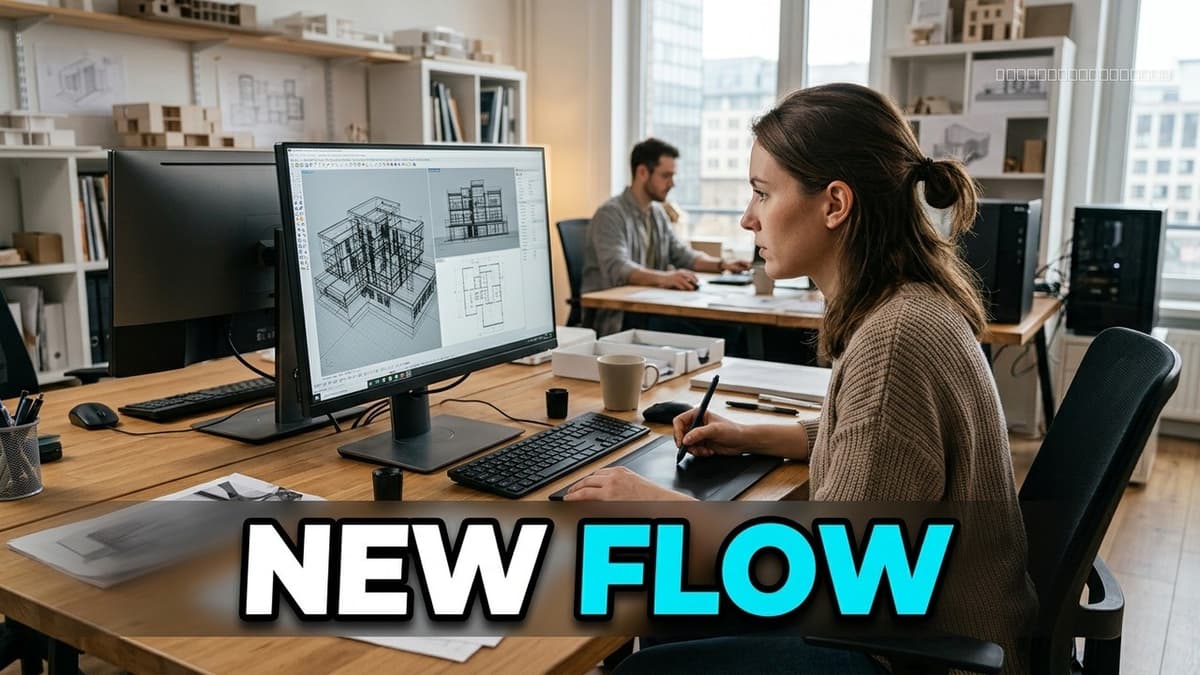

AI is fundamentally changing 3D design workflows. Learn how AI transforms 3D design workflows in 2026 for artists and businesses, with practical tools and strategies.


AI is now actively making scientific discoveries. See how AI makes scientific breakthroughs now, changing R&D for startups. Credibility from 747+ tracked tools.

I tested AI models rewriting Python code for efficiency and clarity. See real world results and my findings. Niko Petrov's honest review.
