
Gemini Flash Agents for Marketing Content: Fast or Flawed?

@rinatakahashi
TL;DR
"Gemini Flash agents promise speed for marketing content. But are they truly efficient for teams? My take on the latest releases. Rina Takahashi's insights."
In the mid 1800s, America was vast, and communication was slow. Then came the Pony Express. Riders, pushing horses to their limits, galloped across the plains, delivering mail from St. Joseph, Missouri, to Sacramento, California, in a dizzying ten days. It was a marvel of it's age, a feat of human and animal endurance, a testament to raw speed. Everyone celebrated it. But it was still just horses and riders. It was a faster horse, not a different way to travel. It's reign was short lived. The telegraph, a whisper through wires, made it obsolete almost overnight. Nobody saw that coming, not really.
Today, we see something similar in AI. The chatter around new model releases, like Gemini 3.5 Flash and Gemini Omni, feels like a new Pony Express. The emphasis is often on raw speed. Faster inference. Quicker responses. Google is pushing these models with promises of incredible agility, and you can see why. The videos touting Gemini 3.5 Flash highlight its rapid iteration capability, designed to handle high volumes of tasks. My initial reaction was, "Wow, that is fast." This is not just a marginal improvement. We are talking about models specifically engineered for velocity.
The speed of Gemini 3.5 Flash, for example, is compelling for any marketing team. Imagine generating a hundred variations of an ad copy, or a dozen subject lines, in the time it used to take for one. This is not theoretical anymore. This is a practical reality. The idea of a "Flash" model is that it is nimble, optimized for low latency interactions. For marketers, that means the ability to test hypotheses almost instantly. You can iterate on campaign messaging, refine social media posts, or even personalize emails at a scale that was previously impossible without a small army of copywriters.
But the real shift isn't just faster horses. It is the telegraph. It is the agentic features. The discussions around "core agent features released today, May 19th, 2026" are what truly grabbed my attention. This is not merely about a model that is quicker to answer a query. This is about a model that can take an instruction, break it down, perform multiple steps, perhaps even call other tools, and then report back. It is about autonomous work. It is not just about writing an email faster. It is about writing the email, scheduling it, analyzing its performance, and then suggesting follow up actions. That changes the game. And honestly, it changes everything.
The core agent features are a fundamental evolution from simple conversational AI. We are moving beyond just chat. These agents are designed to understand complex goals, plan a sequence of actions, and execute them. Think of it less like a chatbot and more like a digital assistant with a high degree of initiative. They can access external information, use APIs. And maintain context across multiple interactions. We see this in the managed agents that Google is highlighting, promising to offload entire workflows. The YouTube content about core agent features shows command line interface (CLI) tests and agent capabilities that allow for more direct interaction with system level tasks. This is the promise: AI that doesn't just respond, but acts.
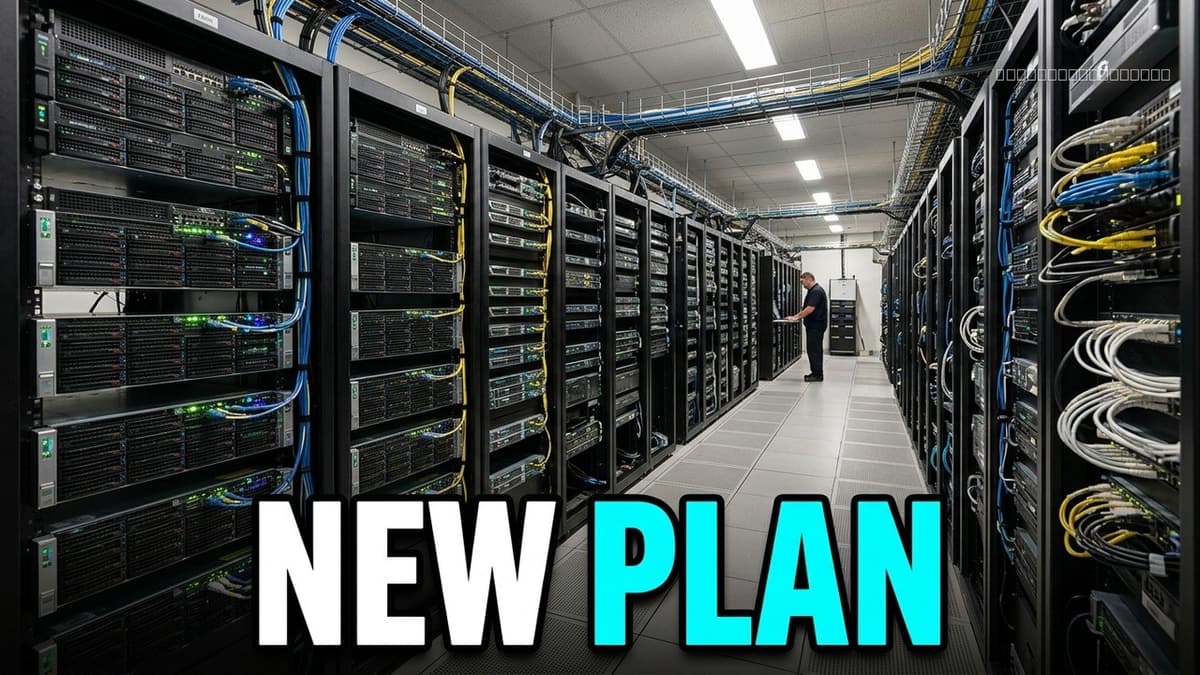
The concept of an AI "supercomputer" like Higgsfield AI, as teased in some of the trending videos, hints at the kind of infrastructure needed to make these agents truly powerful. It is not just about the model itself, but the computational backbone that supports it's advanced capabilities. A marketing team might not directly interact with a "supercomputer," but they will benefit from its power manifesting in faster, more intelligent agents. This is where the engineering meets the practical application. It is the engine under the hood, allowing the new breed of agents to perform tasks with an efficiency that makes previous iterations feel like dial up internet.
The vision is clear: AI agents handling entire marketing campaigns. From ideation to execution, even optimization. But here's the catch, the "one big problem" that the YouTube video on Gemini 3.5 mentions. The reality of complex marketing is messy. It involves human intuition, brand voice subtleties, and working through rapidly changing market conditions. An agent can generate content, but can it truly capture the subtle tone of a specific brand? Can it adapt to a sudden PR crisis with the right empathy? These are questions that remain. My own experience with early agent implementations, which I wrote about in Why AI Agents Fail Marketing Teams Today, suggests that the gap between a tool and a true team member is still wide.
But I do not believe this is a limitation of the technology itself, but rather our current approach. We are still learning how to prompt these agents, how to give them enough context without overwhelming them, how to define success metrics that are both measurable and meaningful. It is like teaching a child to ride a bike. They have the capability, the balance, the coordination. But they need guidance. They need to fall a few times. Marketing is no different. We are in the falling stage. Tools like Relevance AI, Jasper AI, and Copy.ai are already making headway in content generation, but full campaign automation is a higher bar.
The marketing world loves a "free" tool. And AIPowerStacks tracks plenty of them. Notion AI, Obsidian AI, Pi by Inflection, Microsoft Copilot often offer free tiers or freemium models. But the real cost of integrating advanced Gemini agents or leveraging a Higgsfield AI level system for marketing is rarely just the subscription fee. There is the cost of training your team. There is the cost of re designing workflows. There is the cost of data privacy compliance, especially when dealing with customer information. These are not trivial. I have seen marketing teams get excited by a new tool, only to be bogged down by integration challenges. As I explored in How to Prevent Shadow AI in Marketing Teams 2026, neglecting these hidden costs can lead to wasted resources and fractured operations.
We are tracking over 600+ AI tools on AIPowerStacks. Many offer a freemium model. But even the free tools require an investment of time, of learning, of integration into existing systems. Consider the opportunity cost of not adopting these tools versus the direct financial outlay. It is a complex equation. For many small businesses, the challenge isn't the monthly subscription, but the time it takes to truly make these tools work. That is why tracking your AI spend, not just on direct subscriptions but on time and training, is so important. You can track your AI spend on our platform.
The name "Higgsfield Supercomputer" conjures images of massive, inaccessible machines. But the reality is that the power of such systems is increasingly democratized through APIs and specialized tools. For marketing, Higgsfield AI (or similar powerful backends) will likely manifest as enhanced capabilities within familiar applications. Think of it as the invisible engine powering more sophisticated content creation, deeper audience analysis, or more personalized campaign delivery. It means that the output from your ChatGPT or AdCreative AI might become significantly more creative, more contextually relevant, or simply generated at an even faster pace. It is about enabling better intelligence, not necessarily replacing the marketing specialist.
The goal, as I see it, is not to replace human marketers. It is to augment them. To give them superpowers. The Pony Express was fast. The telegraph was a approach shift. Gemini Flash and the new wave of agents are starting to feel like that telegraph moment. They are not just speeding up existing tasks. They are fundamentally changing the nature of how work gets done. And that, in my opinion, is the biggest story of all.
Gemini 3.5 Flash is designed for speed and cost efficiency, making it ideal for high volume, rapid iteration marketing tasks like generating many ad copy variations. Gemini Omni, on the other hand, implies a broader, more general capability, potentially better for more complex, complex marketing strategies that require deeper reasoning. It depends on the specific marketing need. Speed versus breadth.
Yes, small businesses can use AI agents effectively for content, but with realistic expectations. Agents can automate repetitive content tasks, assist with brainstorming, and personalize outreach, freeing up time. However, they still require careful oversight, clear instructions. And human review to maintain brand voice and accuracy. It is a partnership, not a complete handover.
In AI marketing, a "supercomputer" like Higgsfield AI refers to the advanced computational infrastructure that powers highly sophisticated AI models and agents. It means faster processing of vast datasets, enabling more complex algorithms for personalization, predictive analytics. And highly intelligent content generation. It's impact is felt through the enhanced capabilities of the AI tools marketers use daily.
Weekly briefings on models, tools, and what matters.


Why AI agents fail marketing teams today: They promise automation, but struggle with cost, setup, and security. My honest take on the current state and what to expect.


Building an AI powered Notion system feels complex. I break down how to create your 'Agentic Life OS' for peak productivity. Real world setup tips from 675+ tools.

AI tools go beyond simple chat. Discover how AI tools improve business strategy in 2026, boosting decisions. Tomás Herrera's insights from AIPowerStacks.