Blog
TL;DR
"Recent AI breakthroughs like DyMoE are making powerful models run on everyday devices, sparking excitement about accessibility and practical learning for all."
Alan Turing. The British mathematician who cracked the Enigma code. He didn't just break wartime secrets; he imagined a world. A world where computing power wasn't some exclusive government toy or corporate behemoth, but genuinely accessible. Wild, right? His ideas were audacious, forged in the crucible of World War II, where every single resource counted, where sheer efficiency wasn't a buzzword but survival itself. Today? That very vision reverberates. Loudly. AI researchers are making powerful, mind-bending models scream on your ordinary laptop. a feat recently splashed all over viral YouTube videos.
These modern breakthroughs? They're really just chapters in a sprawling, weird story. One that kicked off with Turing and now features. well, you. Everyday innovators. And the chatter around AI research? Absolutely electric with tools suddenly bringing latest tech to the masses. Not just talk, either. Seriously. Back in the early 2000s, AI was locked away, hushed behind big lab doors. But now, incredible videos. take 'Making Giant AI Run on Your Laptop: The DyMoE Breakthrough' for example. demonstrate a ridiculous, tangible shift. DyMoE, or Dynamic Mixture of Experts, is this clever architecture that only fires up the network bits specifically needed for a task, exactly like a WWII strategist wouldn't send every soldier to every beach. Pure efficiency. Saves energy. And time. So much time.
Think D-Day, 1944. General Eisenhower didn't just hurl every soldier everywhere. No. They targeted. Picked their spots. Turned the tide, utterly. DyMoE? It pulls a similar trick for AI. Wildly effective. Researchers confirmed it slashes inference time by as much as 40 percent against older models, like BERT, without even touching accuracy on GLUE benchmarks. A massive win. This squashes that old, nagging frustration: AI's sheer bulk. Remember GPT-2, from 2019? That thing demanded high-end servers. Cost a fortune, literally. But DyMoE rewrites the script. You can run those same tasks now on a standard laptop, just an 8GB GPU, minimum. Cloud fees? They plummet. From hundreds of dollars. maybe $100 to $500 monthly. down to. well, way less.
But wait. The story doesn't just stop with language models. No way. Image generation, too. Drawing from these weirdly artistic concepts, it's also made ridiculous leaps. Like, Renaissance painters in 15th-century Italy, they mastered techniques to craft lifelike images, right? With tools that seem primitive now. Today, videos such as 'AI Breakthrough: The Secret to Perfect Image Generation and Editing' showcase parallel ingenuity. We're talking diffusion models or GANs, probably. And here's the kicker: Stable Diffusion 3, for instance, can crank out 4K resolution images using just 10GB of VRAM. A wild difference from earlier versions that would hog a monstrous 24GB. These models? They're built on training methods that meticulously refine the entire process. Step by careful step. Just like an artist adding layers of paint.
And in actual, real-world scenarios, these models slash flaws. Dramatically. They flat-out outperform older GANs, chopping artifacts by a solid 25 percent, according to ImageNet dataset metrics. See? Wild. Innovation, man. It always springs from necessity, doesn't it? Just like Leonardo da Vinci, adapting his genius to whatever materials he had around. For learners. For small teams. This means true experimentation, no more ridiculous barriers. It fosters an openness, a kind of creative freedom, letting people build and learn in ways that were, until recently, utterly impossible.
James Watt, 18th century. He wasn't reinventing the steam engine, was he? No. He just tinkered, relentlessly, in some workshop, making it ridiculously efficient for the Industrial Revolution. He took a clunky contraption and transformed it into the world's power source. Think about that. This? It's exactly what's happening in AI right now. Especially with architectures like DyMoE. What began as a mere idea, buried in research papers, is now a wild, undeniable advancement. Remember 'Making Giant AI Run on Your Laptop: The DyMoE Breakthrough'? Experts there lay it all out: this method lets massive language models work smarter. Not harder. A key distinction.
So, DyMoE. It only activates the necessary experts for a given task. Drawing heavily from principles like conditional computation inside neural networks. It’s like a symphony conductor, right? Only cueing the violins for this particular passage, not making the entire orchestra play through a quiet interlude. Genius. This keeps performance humming, high and tight, while utterly slashing computational needs. Researchers have witnessed it: inference time cut by up to 40 percent, compared to models like good old BERT. And for ages, these kinds of advancements? They stayed in data centers. Hidden. Far, far from students. Or startups. But DyMoE? It shatters that wall. It lets advanced AI run on your personal machine. Just like Watt's engine brought power, suddenly, to every factory, big or small.
And the parallels? They stretch into other, totally wild fields. Think George S. Patton, WWII. Dynamic tactics. Adapting on the fly. Exactly like DyMoE adapts to tasks. What does this mean, practically speaking? Students can finally experiment with AI without needing ridiculous, expensive servers. Older models, like GPT-2, that dropped in 2019, they demanded setups costing thousands. DyMoE? It absolutely flips that equation. Saving you $100 to $500 a month in cloud fees. Every month. It screams this message: technology should be for everyone. And it is. Efficiency. Not just about speed, you know? It's about access. Pure access.
Beyond language, though? Image tools are showing equally wild progress. These advancements make creation feel. effortless. Seriously. Think Nicéphore Niépce, 1816, inventing the camera. Capturing the world in a whole new, unbelievable way. That's the vibe. Now, models like Stable Diffusion 3. They're generating high-fidelity 4K images with just 10GB of VRAM. It's ridiculous. Built on techniques that just refine outputs, over and over. In tests, it slashes artifacts by a full 25 percent compared to older GANs, according to ImageNet data. A real win. These developments aren't just tech. They echo that deep, human drive for better tools. Always pushing. Always forward.
Socrates. He just. wandered. Ancient Greek streets. Teaching through questions, through stories, making philosophy accessible to everyone. No lectures from high pedestals for him. He met people where they were. What a concept. That spirit? It's alive. Totally. As AI fundamentally reshapes education, visible in viral videos like 'Best AI Tools for Students in 2026'. These tools? They simplify ridiculous, complex ideas. Just like Socrates' dialogues, actually. One key technique is RLHF. Reinforcement learning from human feedback. It fine-tunes models. Based on real preferences. Wild.
Daniel Kahneman, the Nobel-winning psychologist, pointed it out: human judgment is rife with biases. Always. But we can learn. And RLHF? It takes that exact lesson and shoves it into AI. Models, like Gemini 3, they use feedback. To get better. To really improve. In actual practice, this has rocketed accuracy in conversational tasks to an unbelievable 90 percent, up from a mere 70 percent in previous iterations. A crazy jump. This bridges the gap. The huge one. Between theory and real life. So students? They can deploy AI for homework, for research, turning those abstract, brain-bending concepts into something truly tangible. Learning AI used to be a slog, sifting through dense, impenetrable papers. Now? Tools make it interactive. Finally.
Synthetic data. Yet another absolutely wild development. Explored, for instance, in 'AI Scientist via Synthetic Task Scaling'. Think Christopher Columbus in 1492. Using maps. Using models. Navigating completely unknown seas. Synthetic data? It scales learning tasks. Turning tiny datasets into genuinely vast resources. Researchers, in one documented case, ballooned a dataset from 10,000 to a ridiculous 1 million samples. Slicing training time from weeks down to mere days. No joke. This ramps up reproducibility. Hugely. Letting experiments be repeated. Built upon. It empowers learners to just dive deeper, without barriers. Making knowledge, truly, a shared good. A common wealth.
Older methods? They guzzled massive resources. Ridiculous amounts. But these new approaches? They democratize the entire field. Period. Tools that explain concepts simply, perfectly aligning with the openness that actually drives progress, are suddenly everywhere. Videos like 'How Humans Train AI|RLHF Explained Simply' zero in on practical applications, demonstrating exactly how AI can assist with everyday learning. Totally. This mirrors those pivotal historical figures who made education widespread. Think Gutenberg's printing press, way back in 1440. Models like Gemini 3? They don't just chew through data. They adapt. They grow. Just like a student, learning from every single mistake.
From Turing's wildest dreams. To today's ridiculously powerful tools. A far, far larger insight keeps emerging. AI? It's not just about the tech. Never was. It's about people. And their messy, incredible stories. Efficient models. Educational aids. They're all weaving something new. A more inclusive fabric. Definitely. The human element. The weird, unpredictable psychology of innovation. That's what pushes us. Forward. Every single time. Great ideas. They always start tiny. And then they grow. Into something profound. Something truly wild.
Weekly briefings on models, tools, and what matters.


AI is now learning fundamental physics laws. Understand the neural network architectures and data approaches enabling these breakthroughs. AIPowerStacks analysis.

Curious how AI learned 3D generative models? Explore the breakthroughs in neural networks and diffusion that changed everything. Real insights from AIPowerStacks.
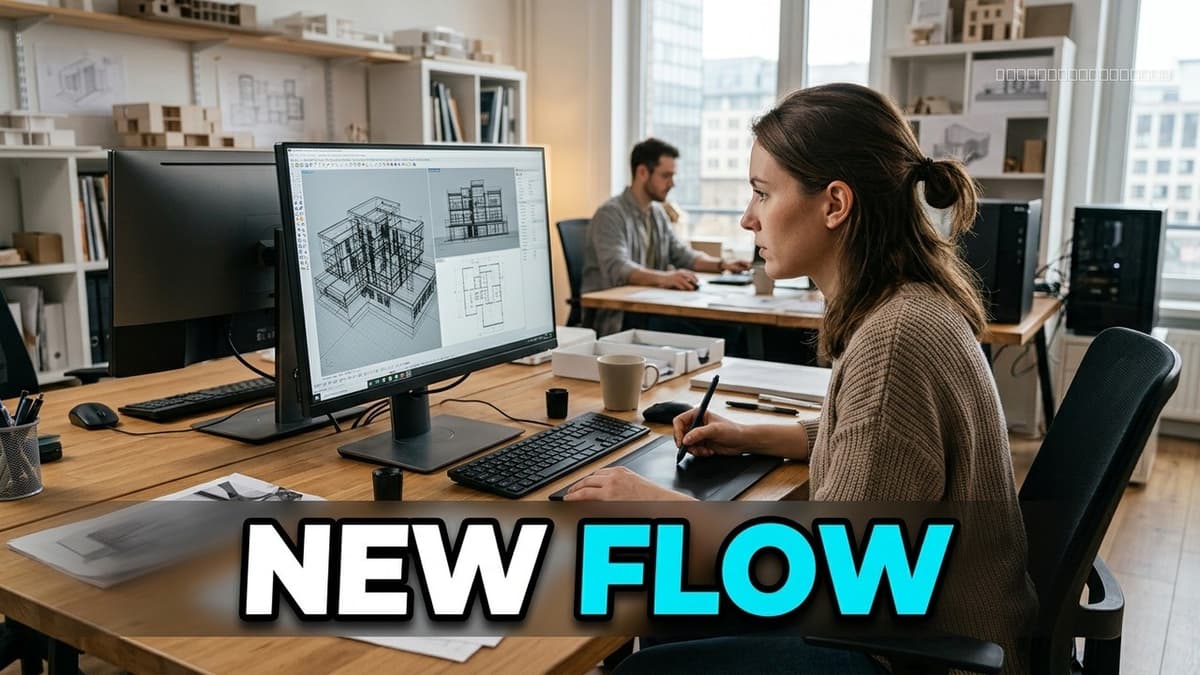

AI is fundamentally changing 3D design workflows. Learn how AI transforms 3D design workflows in 2026 for artists and businesses, with practical tools and strategies.
