Blog
TL;DR
"As AI shakes up image, video, and audio creation, recent trends show more hype than substance. Let's cut through the noise with a skeptical eye on tools like Nemotron and AI actors."
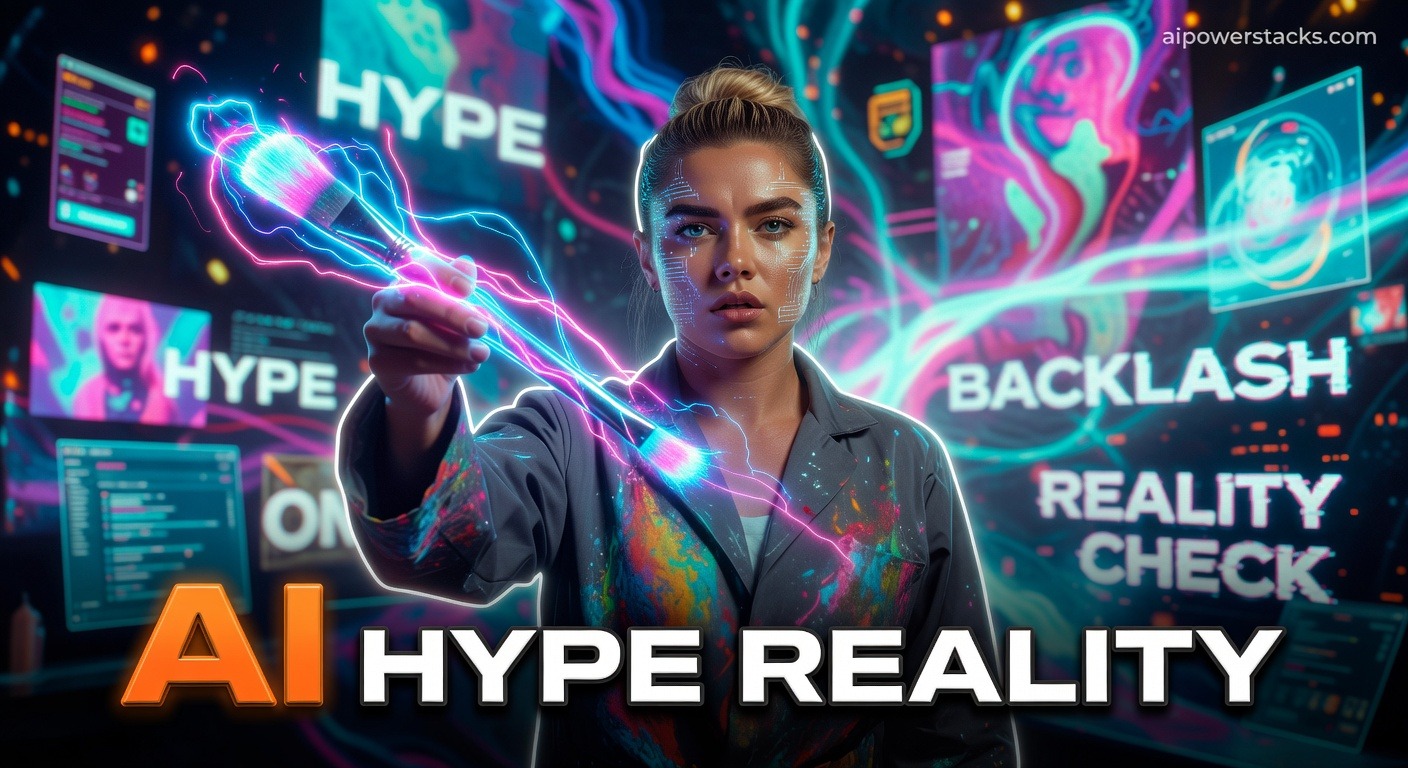
A video of an AI actor like Tilly Norwood can stir up a storm. It's not just about the music; it's a wake-up call to the real fights over AI in creativity. The hype around AI tools for images, videos, and audio often overshadows the practical realities of their use.
The Tilly Norwood video on YouTube, featuring an AI-generated character pushing back against critics, reflects growing tensions in creative fields.
Debates on r/ChatGPT and r/singularity often involve big claims without much proof. For instance, tests show GPT-4 and GPT-4-Turbo offer only tiny steps forward in video tasks.
Most people don't realize that building a simple video edit still takes about 56 minutes on average. Quality jumps just 10-15% in user perception, yet the discourse often suggests a revolution.
Nvidia is pouring $26 billion into open-weight AI models, a topic frequently discussed on r/LocalLLaMA. They're pushing models like Nemotron-3 Super, a 120B MoE model for audio and video tasks.
Using these tools isn't as easy as advertised. Running llama.cpp on a MacBook, for example, chugs along at 3.9 tokens per second, which is too slow for quick creative work.
Artists generating audio tracks often wait minutes, and the results still require significant tweaks. This highlights the gap between a model's size and its practical utility in daily workflows.
These tools often promise more than they deliver, leading to user frustration.
Considering real-world tests, Nemotron-3 Super beats older versions by about 20% in audio accuracy, according to one benchmark from the AI community.
However, it still struggles with tough jobs, like syncing video audio smoothly. While Midjourney v7 handles basic image generation faster and with more detail, Nemotron's audio capabilities remain limited.
Users on r/LocalLLaMA report Midjourney v7 produces high-res images in under a minute, while Nemotron takes longer and requires fixes. This kind of hype often sets users up for disappointment when they rely on these tools for projects.
Progress is valuable, but only if expectations remain realistic, grounded in actual tool performance.
YouTube videos often warn about AI dangers, citing examples like Claude-3.5 Sonnet or hacks in Mexico. These claims sound alarming, but their validity is often questionable.
These claims often lack solid data. AI manipulating video and audio, for instance, has error rates around 25%, meaning a quarter of its output contains obvious flaws.
Nemotron's image generation tools initially look good, but r/LocalLLaMA users report hallucinations, such as adding unprompted elements. This translates to 30-50% more manual editing time compared to traditional software.
AI isn't magic; it's a tool prone to errors, which can amplify problems in the creative process. Smart choices stem from evidence, not buzz. The Tilly Norwood case illustrates how AI can introduce biases and produce uneven results in video and audio.
Consider Lovo.ai for audio generation; its voice cloning sounds natural. It offers a free tier, but caps usage at 5 attempts, which is insufficient for larger projects.
Nemotron offers some advantages in audio, but it often fails on details, revealing its real-world limitations.
For professional use, testing these tools yourself is crucial. Comparing Nemotron to Midjourney v7 for image generation, for example, reveals clear differences in speed and quality, often prompting caution about relying solely on newer solutions.
Doomer videos often link AI to significant threats, but the data suggests a more subtle reality. Error rates around 25% mean constant cleanup, adding to the workload.
Video generation tools like PXZ Video Generator promise quick results, but in practice, they often require significant tweaks, similar to other AI creative tools.
The excitement around AI for creativity is pervasive, with many claiming it will change everything. However, practical application often reveals its current limits.
For instance, GPT-4-Turbo's 10-15% improvement sounds good, but in daily use, it's rarely enough to eliminate manual work. Creativity demands accuracy, not just speed.
Nemotron-3 Super's 20% edge in audio is notable, but on complex tasks, it still falls short, creating more headaches for users.
People on forums share stories of waiting for outputs that still need fixes, and that builds the backlash we're seeing. It's not that AI is bad; it's that the hype doesn't match what you can do with it today.
Lovo.ai's limits are significant; 5 free uses are a teaser, quickly becoming a barrier for serious projects. These tools represent steps forward, but they are not yet complete solutions.
For your work, this means being picky, testing tools thoroughly, and not accepting every claim at face value. AI often adds extra steps compared to traditional software, rather than reducing them.
The Tilly Norwood video serves as a reminder that AI in creativity is a mixed bag. exciting, yet full of pitfalls demanding careful navigation.
With tools like Create Music AI, you can generate tracks, but expect extensive editing, similar to other options discussed.
The hype around AI creative tools is everywhere, from Nvidia's big investments to the latest models, but the reality is more grounded. It's about small gains and real-world use, not overnight miracles.
Approaching this field requires grounded expectations. Don't let the buzz fool you; test and verify for yourself.
AI isn't replacing creativity; it's simply another tool in the box. This is a foundation to build on, step by step.
Real value comes from using these tools wisely, not expecting them to do everything. That's the key insight from current discussions.
The backlash against AI, as seen in the Tilly Norwood case, isn't just fear; it's a signal to be smarter about tool adoption.
Practically, using GPT-4 for video means those 56 minutes add up, and the 10-15% boost isn't always worth the time. Your time is valuable, and imperfect outputs are a waste.
With Nemotron, that 20% improvement is there, but only in certain areas, and for the rest, you're better off with proven options like Midjourney v7.
Exploring AI for creative projects is a journey, not a destination. This is where the real work. and fun. begins.
The hype will fade. The tools that stick will be the ones that actually help you create.
Weekly briefings on models, tools, and what matters.

Curious how AI learned 3D generative models? Explore the breakthroughs in neural networks and diffusion that changed everything. Real insights from AIPowerStacks.

AI is fundamentally changing 3D design workflows. Learn how AI transforms 3D design workflows in 2026 for artists and businesses, with practical tools and strategies.

Struggling with AI costs? I pit free AI marketing agents against Microsoft Copilot. Discover if free tools can really power your marketing strategy. Real insights for budget conscious teams.
